Daily · Article 03 · 3 min read
Genie 4 reaches the API. What stops a world session’s charges?
Google announcement dated November 19 · November 20, 02:00 JST
Summary
Google opened Genie 4 to paid Gemini API projects. Here’s how Project Genie access differs and what ends generation and billing.
Key facts
Google announced Genie 4 through the Gemini API and its developer playground, Google AI Studio, at 02:00 JST on November 20. The announcement is dated November 19. A developer can connect an application to a generated world that responds to movement and scene-change requests. The API guide calls for a paid key and documents 720p video at 24 frames per second with synchronized stereo audio. Google announcement · API guide
1. Two ways to explore the same kind of place
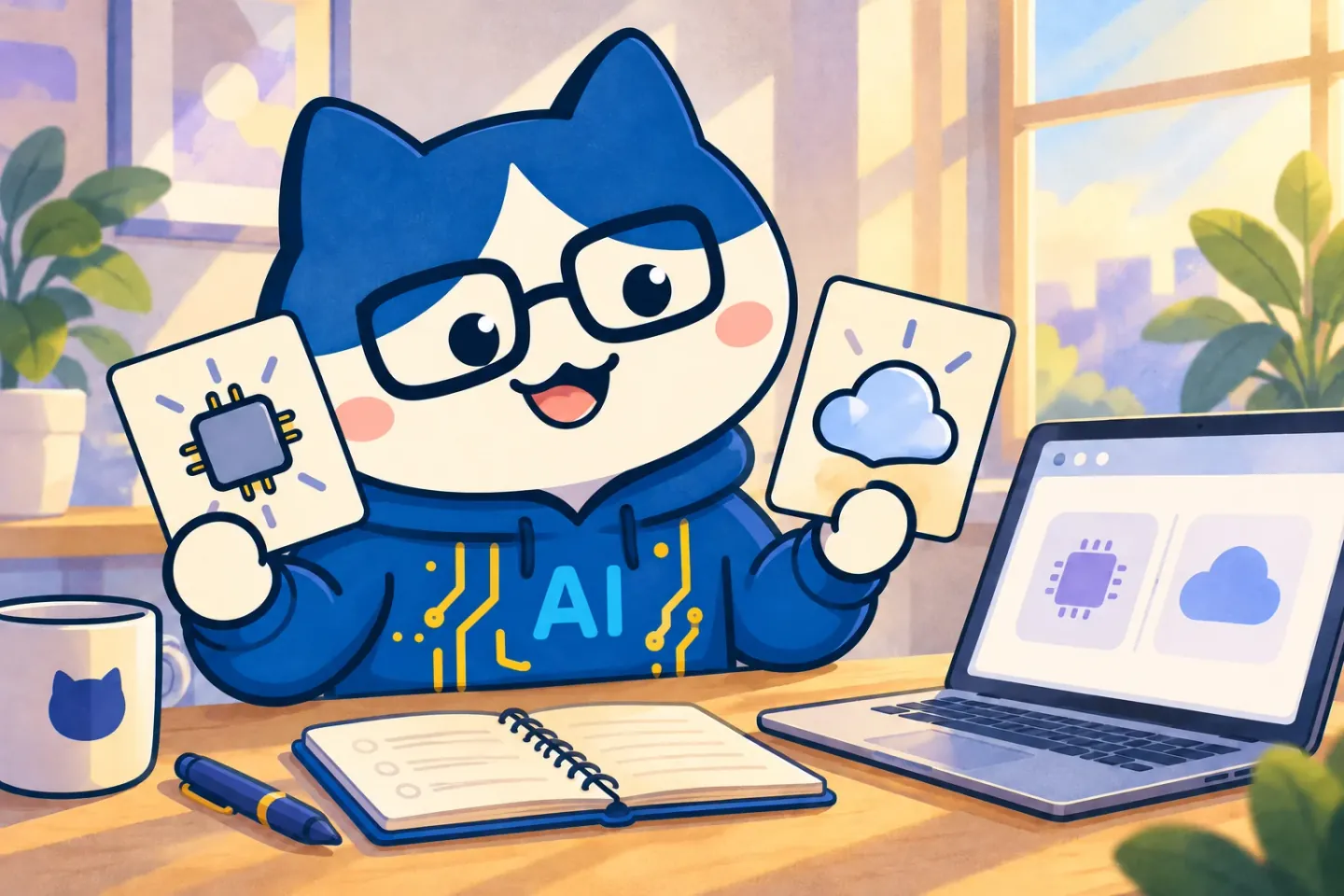
Suppose you want to change the lighting at an imagined museum entrance. In Project Genie you open a web experience and explore it yourself. With the API, a developer can build that interaction into an app that receives the next frames from the server as a visitor moves.
| Route | Who can use it and what they can do | Access condition | Source |
|---|---|---|---|
| Project Genie | A person can explore the entrance and ask for a lighting change | Genie 4 rollout to eligible Google AI Ultra members. Personal account, age 18 or older and supported region. Pro waitlist is for Project Genie | Web rollout · Access help |
| Gemini API | A developer can integrate the same exploration in an app | Paid Gemini API project key and the v1beta Interactions API. No free API tier | API guide · Pricing |
- Route
Project Genie
- Who can use it and what they can do
- A person can explore the entrance and ask for a lighting change
- Access condition
- Genie 4 rollout to eligible Google AI Ultra members. Personal account, age 18 or older and supported region. Pro waitlist is for Project Genie
- Source
- Web rollout · Access help
- Route
Gemini API
- Who can use it and what they can do
- A developer can integrate the same exploration in an app
- Access condition
- Paid Gemini API project key and the v1beta Interactions API. No free API tier
The cat asks Q&A
 The researcher
If the API supports it, can I use it today on my Project Genie account?
Pocket NotebookCheck whether Genie 4 appears in the web app’s model picker. The API docs describe a separate way to call it from a paid project.
2. What can keep running after a tab closes
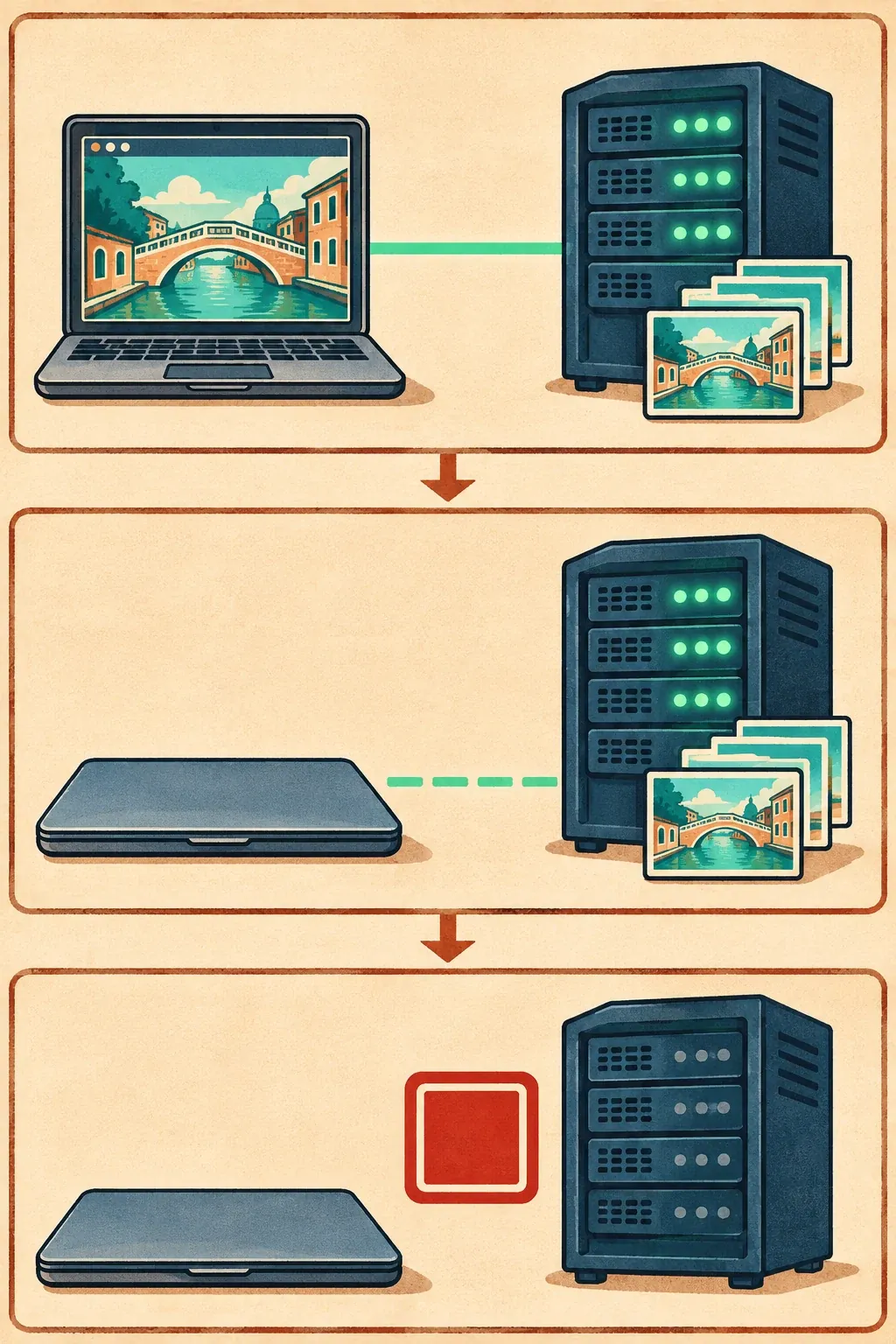
An application sends a starter description or reference image, then keeps a connection open for controls and output. Closing the tab drops that connection. Generation on the server can continue for a time, so Google documents an explicit complete() call to finish the session.
The cat asks Q&A
- The researcher
Can my app clean up if the visitor just closes the window?
Pocket NotebookDesign for both the normal stop and a dropped connection. Server-side records should let you check whether a generating session remained open.
3. Turning emitted frames into a cost
A frame is a single picture in a video. Google counts each one as 240 output tokens and includes audio in the video rate. Standard video output costs $17.50 per million tokens. At 24 frames per second, 24 × 240 = 5,760 tokens per second. Multiply 5,760 ÷ 1,000,000 by $17.50 to get about $0.1008 per second. Official pricing
| Hypothetical video output | Output tokens | Video portion |
|---|---|---|
| 30 seconds at 24 frames per second | 172,800 | About $3.02 |
| 60 seconds at 24 frames per second | 345,600 | About $6.05 |
- Hypothetical video output
30 seconds at 24 frames per second
- Output tokens
- 172,800
- Video portion
- About $3.02
- Hypothetical video output
60 seconds at 24 frames per second
- Output tokens
- 345,600
- Video portion
- About $6.05
The cat asks Q&A
- The researcher
Does the whole 30-second demo cost $3.02?
Pocket NotebookThe table covers emitted video and its bundled audio. Text or reference-image input, and any text output, have their own rates.
To close
Check both the visit length and the server’s generation time
A developer can set the length of a first demo and verify that server generation ends when the connection drops. Google’s guide describes a 120-second hard cap and limits to scene consistency. If a project needs the same place to persist between sessions, plan how to maintain its state outside the stream. API limitations
Sources
- Google announcementblog.google
- API guideaistudio.google.com
- Web rolloutblog.google
- Access helpsupport.google.com
- Official pricingaistudio.google.com
- API limitationsaistudio.google.com