Daily · Article 02 · 4 min read
Gemini 4 Hydrogen arrives. The app and API select it differently
Google announcement November 13, 03:00 JST · API release notes dated November 12
Summary
The free Gemini app may choose Hydrogen automatically for a prompt. Developers can name Hydrogen directly in free or paid Gemini API projects.
Key facts
At 03:00 JST on November 13, Google announced Gemini 4 Hydrogen, a new AI model that can read documents and images and produce answers. It is rolling out in the Gemini app. Free users can reach Hydrogen when automatic model selection is on and the app chooses it for their prompt. Google has also made it generally available on the free and paid tiers of the Gemini Developer API, which connects other programs to the model. Paid Standard rates are $1.50 per million input tokens and $7.50 per million output tokens. Google announcement · API release notes · Pricing

1. Who sends the library schedule to the model?
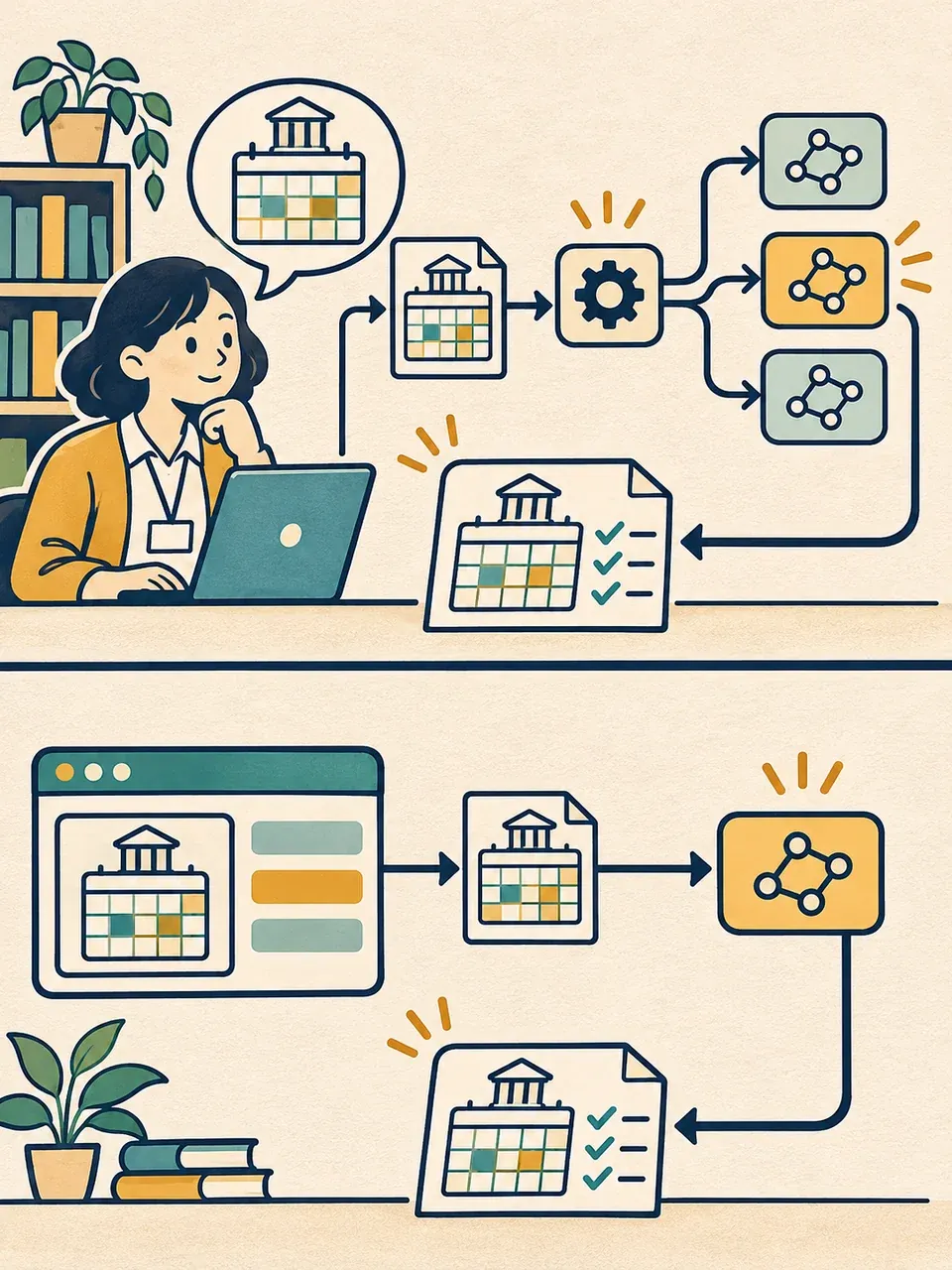
Suppose a librarian wants to find events booked in the same room at overlapping times. The Gemini app is the chat interface where the librarian can ask for that check. The model reads the material and produces the answer. A scheduling program can use an API, a connection for sending the request and file and receiving the result. In the illustration, the app chooses the model in the upper panel. The program names Hydrogen in the lower panel.
The cat asks Q&A
 The researcher
Both result sheets look alike. Will the two answers always match?
Pocket NotebookThe sheets represent the same kind of task. The app can choose a model for each prompt, and even two Hydrogen responses can flag different events if the settings or instructions change.
2. Can I choose Hydrogen on my account?
Both routes can compare the same event names, rooms and times. In the app, personal Google accounts follow their plan and remaining usage. Work and school accounts depend on their Google Workspace license. For the API, check the project tier and its limits.
| Route and user | How the schedule is checked | Hydrogen access and evidence |
|---|---|---|
| Gemini app · librarian | Upload the schedule and ask about overlaps in chat | Free accounts use automatic selection when enabled and the app judges it suitable. The chat model lists for AI Plus, Pro and Ultra include Hydrogen, subject to rollout and usage limits. App help · Rollout announcement |
| Gemini Developer API · scheduling program | Send the file and request to gemini-4-hydrogen and receive the response | Generally available on free and paid projects, with tier-specific limits and tool conditions. API release notes · Pricing |
- Route and user
Gemini app · librarian
- How the schedule is checked
- Upload the schedule and ask about overlaps in chat
- Hydrogen access and evidence
- Free accounts use automatic selection when enabled and the app judges it suitable. The chat model lists for AI Plus, Pro and Ultra include Hydrogen, subject to rollout and usage limits. App help · Rollout announcement
- Route and user
Gemini Developer API · scheduling program
- How the schedule is checked
- Send the file and request to
gemini-4-hydrogenand receive the response - Hydrogen access and evidence
- Generally available on free and paid projects, with tier-specific limits and tool conditions. API release notes · Pricing
The cat asks Q&A
- The researcher
Does the free API mean I get a Hydrogen button in my free Gemini app?
Pocket NotebookOn the free app, Hydrogen is accessed through automatic selection. Google’s Android help shows how to check the model for a specific reply under More, then See response details. The API model name is selected separately by the program.
3. Why check output usage when the answer looks short?
Tokens are units the model uses to process material. A line of text or a page can take different numbers of tokens. Paid Standard API rates distinguish the input sent to the model from what it produces. Output usage includes thinking tokens, which the model uses to prepare the answer, as well as the visible reply. Suppose the API records 20,000 input tokens and 2,000 billable output tokens for one schedule check.
| Paid Standard API item | Example usage | Rate per million tokens | Example charge |
|---|---|---|---|
| Input · request and material | 20,000 tokens | $1.50 | $0.030 |
| Output · reply and thinking | 2,000 tokens | $7.50 | $0.015 |
| Total | One request | Input plus output | $0.045 |
- Paid Standard API item
Input · request and material
- Example usage
- 20,000 tokens
- Rate per million tokens
- $1.50
- Example charge
- $0.030
- Paid Standard API item
Output · reply and thinking
- Example usage
- 2,000 tokens
- Rate per million tokens
- $7.50
- Example charge
- $0.015
- Paid Standard API item
Total
- Example usage
- One request
- Rate per million tokens
- Input plus output
- Example charge
- $0.045
The example uses neither caching nor an external search tool. Grounding, which uses Google Search to support answers, is unavailable on this model’s free tier and has separate usage terms on the paid tier. API pricing
The cat asks Q&A
- The researcher
Can I budget 4.5 cents every time I send one schedule?
Pocket NotebookThat is the cost at the example’s token counts. Check actual input and output usage with a representative schedule, then add the recorded usage across requests if the program makes several passes.
To close
The model behind a reply and the model your program requests
For a quick check in the app, look at the reply details and compare the dates and rooms with the original. For repeat work in a program, keep the model name and project usage together so you can explain the result and its cost.
Sources
- Google’s Gemini 4 Hydrogen announcementblog.google
- Gemini Developer API release notesaistudio.google.com
- Hydrogen API pricingaistudio.google.com
- Gemini app guide to choosing modelssupport.google.com
- Google DeepMind model carddeepmind.google